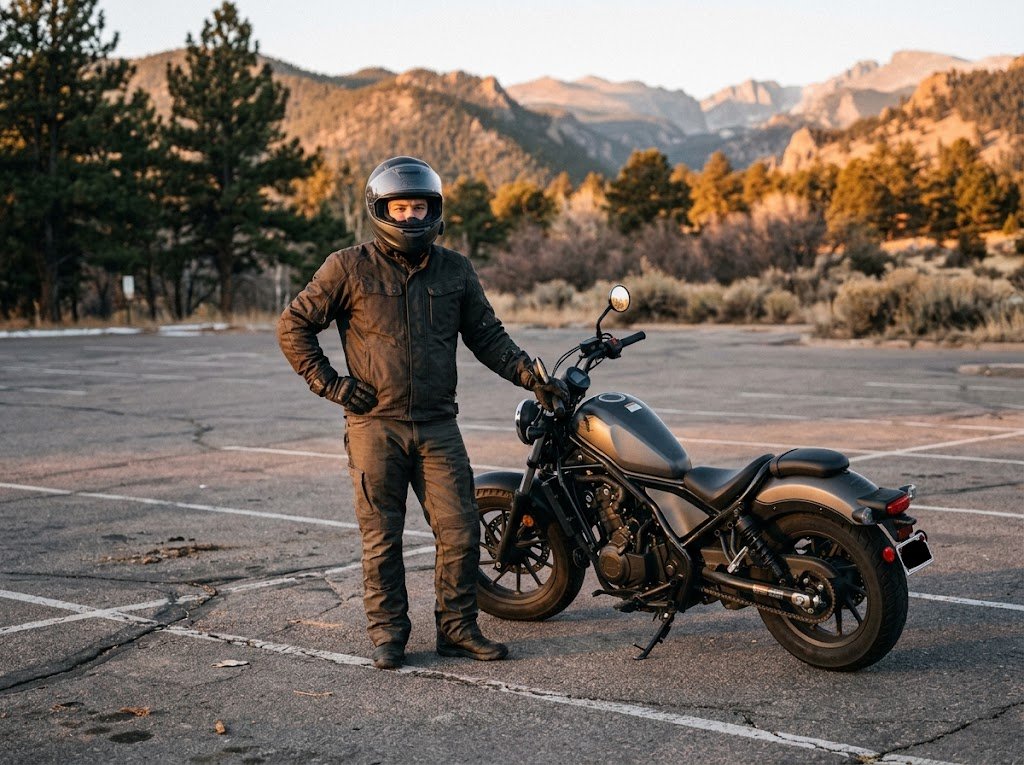
How Do You Winterize a Motorcycle, ATV, or UTV in Colorado?
To winterize a motorcycle, ATV, or UTV in Colorado, wash and dry it, change the oil, fill the tank with fresh fuel and stabilizer, and keep the battery charged. Then check the coolant, protect the tires, and store it dry under a breathable cover. Follow your owner's manual, since procedures vary by model.
When Should You Winterize a Motorcycle, ATV, or UTV in Colorado?
Winterize when you finish your last regular ride of the season, ideally before the first hard freeze. Colorado winters swing between cold snaps and mild days, so it is tempting to leave a machine half-prepared and ride "one more time."
Honda's owner's manuals tell you to prepare for storage whenever you will not ride for an extended period, and to inspect the machine and fix problems first. That way repairs are not forgotten, and it is easier to get the machine running in spring. If your bike or side-by-side will sit for weeks at a time, treat it as stored.
How Do You Winterize a Motorcycle Step by Step?
Clean it, service it, protect the fuel and battery, then store it dry and covered. Here is the checklist most riders should follow, from a Rebel 500 to a Gold Wing.
Wash and dry it. Dirt, bugs, and road film sit on paint and metal all winter. Wash, dry, and wax painted surfaces.
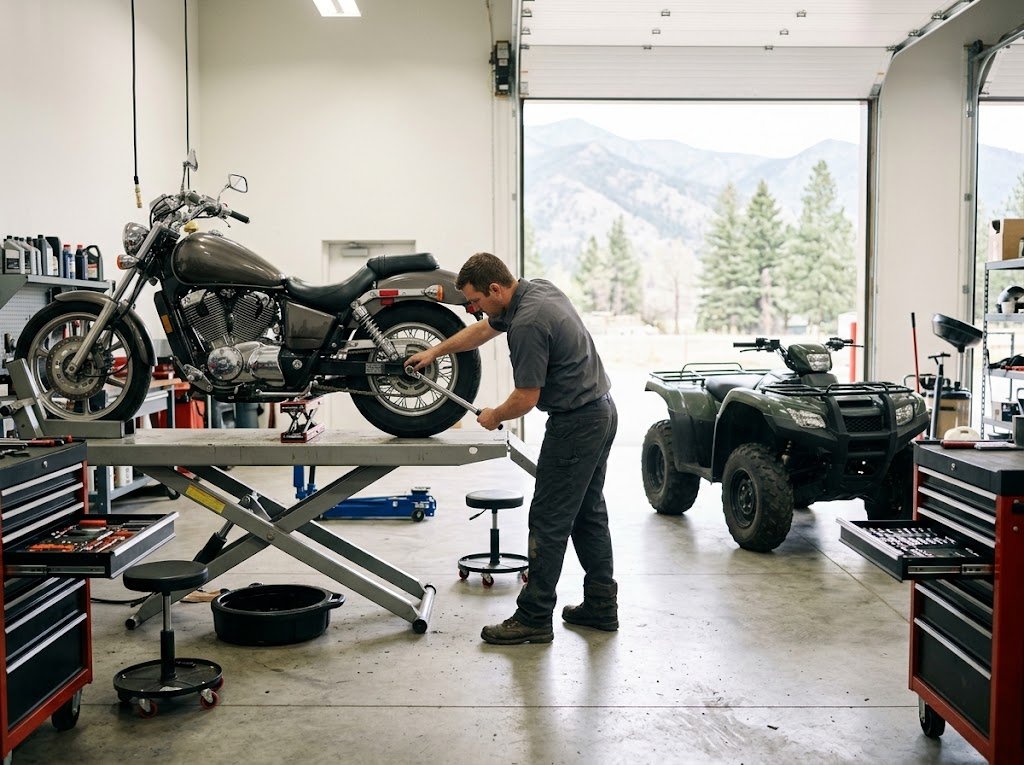
Do routine service first. Clean and lube the chain, lube pivot points, and check brake fluid and coolant. If you are more than halfway to an oil change, change it now.
Change the oil and filter. Honda's seasonal tips list an oil change before storage, because leftover used oil can leave corrosive byproducts in the engine.
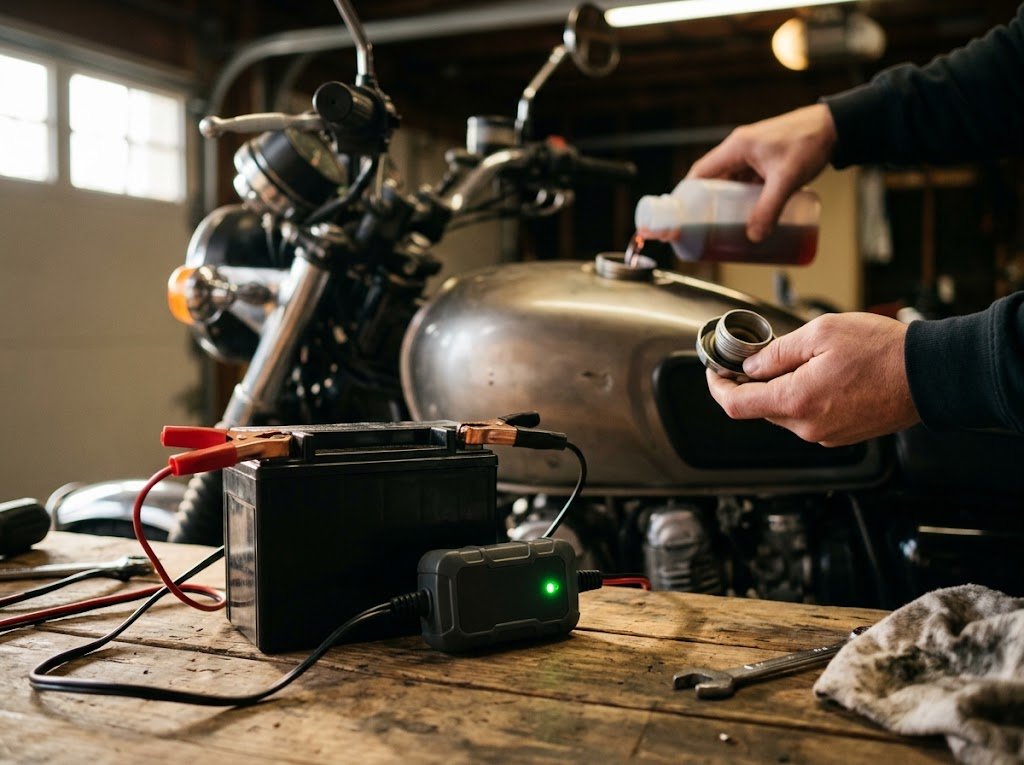
Fill the tank and add stabilizer. A full tank leaves less room for air and moisture. Add fuel stabilizer, then run the engine briefly so the treated fuel reaches the fuel system.
Keep the battery alive. Use a smart battery charger (maintainer) on a lead-acid battery. For lithium batteries, disconnecting the negative terminal is a common approach. Check your manual for your battery type.
Set the tires. Inflate to the recommended pressure and, if you can, put the bike on a stand so the tires are off the floor.
Block rodents and moisture. Some owners cover the airbox and exhaust opening. If you do, leave a reminder tag on the handlebar so you remove them before starting.
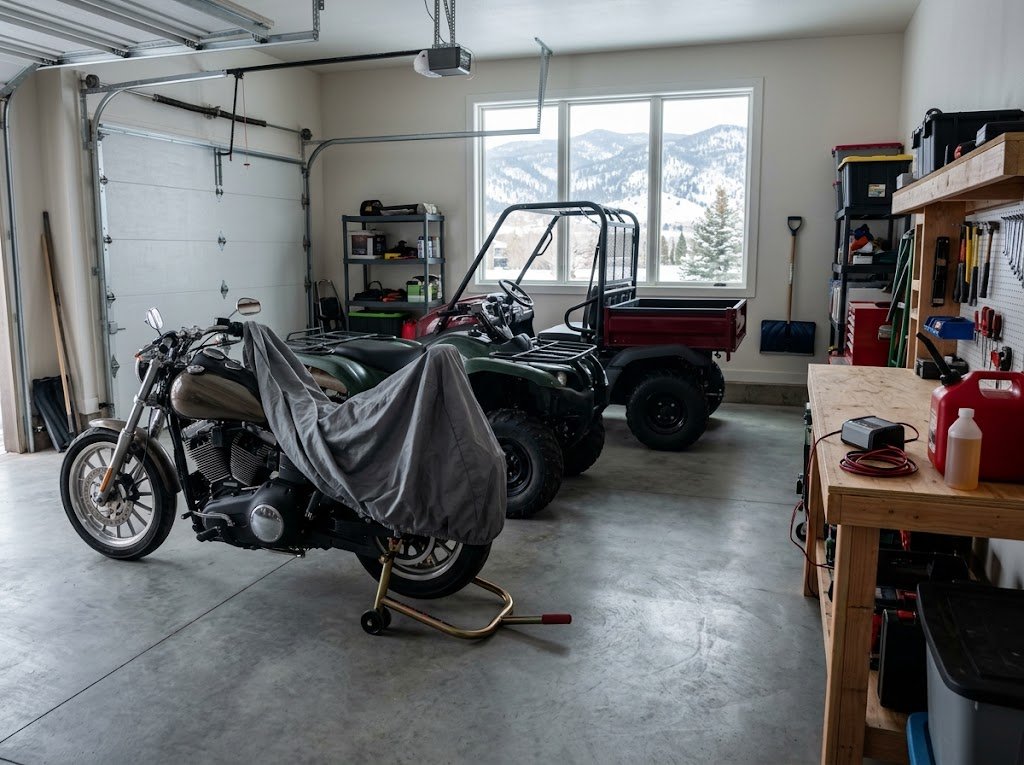
Cover it. A cover keeps dust off an indoor bike and is a must outdoors.
Store it somewhere dry. Pick a spot with little dampness and as few temperature swings as possible.
Looking for stabilizer, a battery maintainer, or a cover? Start with Peak Honda World's parts and accessories page or the online parts store, and ask the team what they recommend for your model.
How Is Winterizing an ATV or UTV Different From a Motorcycle?
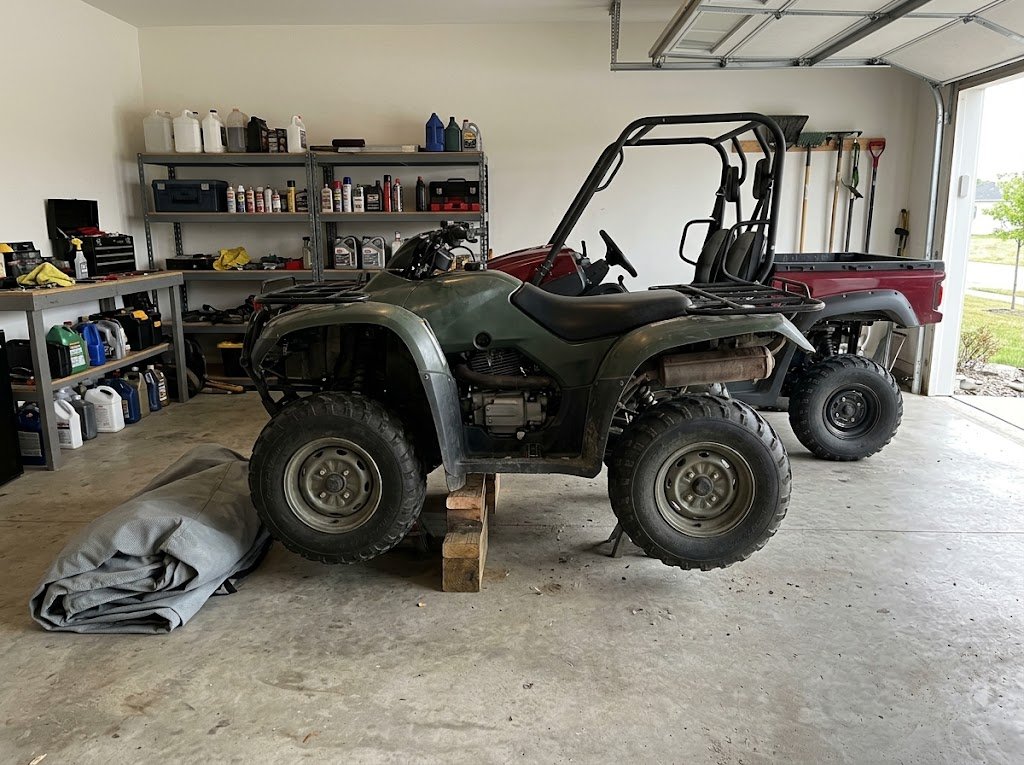
The core steps are the same, but ATVs and UTVs add a few extras, and liquid-cooled UTVs need a coolant check.
ATVs. Honda's ATV owner's manuals walk through a storage routine for models like the FourTrax Foreman, FourTrax Rancher, and FourTrax Rubicon. It includes:
Changing the engine oil and filling the fuel tank.
Making sure the fuel valve is off.
Protecting the cylinder from rust by putting a small amount of clean engine oil in the cylinder through the spark plug hole, then cranking the engine as the manual directs.
Removing the battery, charging it fully, storing it away from freezing temperatures, and slow charging it once a month.
Washing, drying, and waxing the ATV, then setting tire pressure.
Covering it with a breathable material. Honda warns against plastic or coated covers that trap heat and moisture.
Lifting the tires off the floor on blocks.
Some carbureted models also require draining fuel, so follow the steps in your manual closely.
UTVs and side-by-sides. Honda's seasonal tips for ATVs and side-by-sides add that you should make sure coolant is topped up, and that you move the machine periodically in storage to help prevent tire deformation. For a Pioneer 700, a Pioneer 1000, or a Talon, also confirm the coolant is mixed for the lowest temperatures your storage spot will see.
Dirt bikes. Small bikes like a CRF110F or CRF450R follow the motorcycle checklist. Pay extra attention to cleaning, chain care, and fuel protection.
What If You Keep Riding in Colorado Winters?
If you ride year-round, skip full storage but add a post-storm wash and regular tire and battery checks.
The Colorado Department of Transportation uses magnesium chloride and other de-icers on state roads, and its guidance is to wash vehicles after snowstorms to remove liquid de-icer residue. For a motorcycle, that means rinsing the wheels, chain, brake components, and underside after riding on treated roads.
Cold air also lowers tire pressure, so check it often. Good gear matters too. Peak Honda World lists riding gear from brands such as Arai, Shoei, Bell, Fox, Alpinestars, Icon, and RST on its parts and accessories page. If you ride dual-sport or adventure bikes like the Africa Twin or CRF300L Rally, winter riding is more realistic, but the same wash-and-check habits apply.
UTV owners can also put a machine to work in winter. The dealership's parts page lists ATV and UTV plows and Honda snow blowers.
What Mistakes Should You Avoid When Winterizing?
The biggest mistakes are skipping fuel protection, ignoring the battery, and using the wrong cover.
Leaving old fuel in the tank. Stale fuel can turn into residue that plugs fuel lines. Use fresh fuel and a stabilizer.
Letting the battery go flat. A dead battery is the most common spring surprise. Use a maintainer or remove and charge it.
Using a plastic cover. Honda warns that non-breathing covers trap moisture and heat.
Storing it dirty. Dirt and de-icer left on the machine can cause corrosion.
Forgetting the exhaust and airbox plugs. If you add them, remove them before you start the engine.
Skipping repairs. Fix known issues now so you are not starting spring with a to-do list.
Ignoring the manual. Procedures differ for carbureted, fuel-injected, liquid-cooled, and air-cooled machines.
How Can Peak Honda World Help You Winterize?
Peak Honda World, at 5057 S Wadsworth Blvd in Littleton, can help you get the right supplies and talk through your model. Visit the service department to ask about seasonal service, and use the parts store for storage and winter-riding supplies.
If winter prep shows that your machine costs more to keep than it is worth, check your value on the trade-in page, then browse new inventory, pre-owned units, and current specials. You can browse by type: motorcycles, ATVs, UTVs, and dirt bikes. Financing options are available when you are ready.
Local riders can use these pages for Honda inventory near:
Denver: street bikes, ATVs, side-by-sides
Lakewood: street bikes, ATVs, side-by-sides
Westminster: street bikes, ATVs, side-by-sides
Aurora: street bikes, ATVs, side-by-sides
Arvada: street bikes, ATVs, side-by-sides
Questions? The Peak Honda team is happy to help, and you can read what other customers say on the testimonials page.
Frequently Asked Questions
Do you need to winterize a motorcycle in Colorado?
Yes, if it will sit unused for weeks or months. Cold swings, moisture, and old fuel can cause battery, fuel, and corrosion problems. If you ride through winter, you may not need full storage prep, but you should still wash off road de-icer after storms and check tire pressure often.
Should you leave gas in the tank or drain it for winter?
For most machines, Honda's ATV storage steps call for filling the tank, and a fuel stabilizer helps protect that fuel. Some carbureted models also require draining fuel from the carburetor, and the manual explains how. Check your owner's manual for your exact model before deciding.
Do you need a battery tender for winter storage?
A smart charger or battery maintainer is the easiest way to keep a lead-acid battery healthy over winter. Honda's ATV manuals also say to remove the battery, charge it fully, store it away from freezing, and slow charge it monthly. Lithium batteries often need different handling, so check your manual.
Should you store an ATV or UTV outside in Colorado?
A dry, protected spot is best. Honda's ATV manuals recommend storage away from dampness and sunlight with minimal daily temperature variation. If you must keep it outside, use a breathable cover, never plastic, and consider removing the battery and storing it charged somewhere protected.
Do you need an oil change before winter storage?
Honda's seasonal tips list an oil change before storage, because used oil left in the engine can form corrosive byproducts. Honda also suggests changing the oil again after storage if the machine sat for more than four months. Always follow the service intervals in your owner's manual.
How do you get a motorcycle or ATV ready after winter storage?
Reverse the checklist. Check for rust, inspect tire pressure, clean battery terminals and reinstall the battery if you removed it, lube the chain if your bike has one, and check fluids. Honda also recommends an oil change if the machine was stored more than four months.
Can Peak Honda World help with winter service and supplies?
Peak Honda World has a service department and a parts and accessories department in Littleton. Call (303) 569-8008 or stop by 5057 S Wadsworth Blvd to ask about winter service options, fuel stabilizer, battery maintainers, covers, and other storage supplies for your motorcycle, ATV, or UTV.
Final Takeaway
Winterizing comes down to a few habits: clean the machine, change the oil, protect the fuel, keep the battery charged, set the tires, and store it dry under a breathable cover. ATVs and UTVs add a few model-specific steps, and Colorado riders who keep riding should wash off de-icer after storms.
Need supplies, service, or a new ride for next season? Visit Peak Honda World in Littleton, contact the team, or browse the full Honda lineup.battery, and